


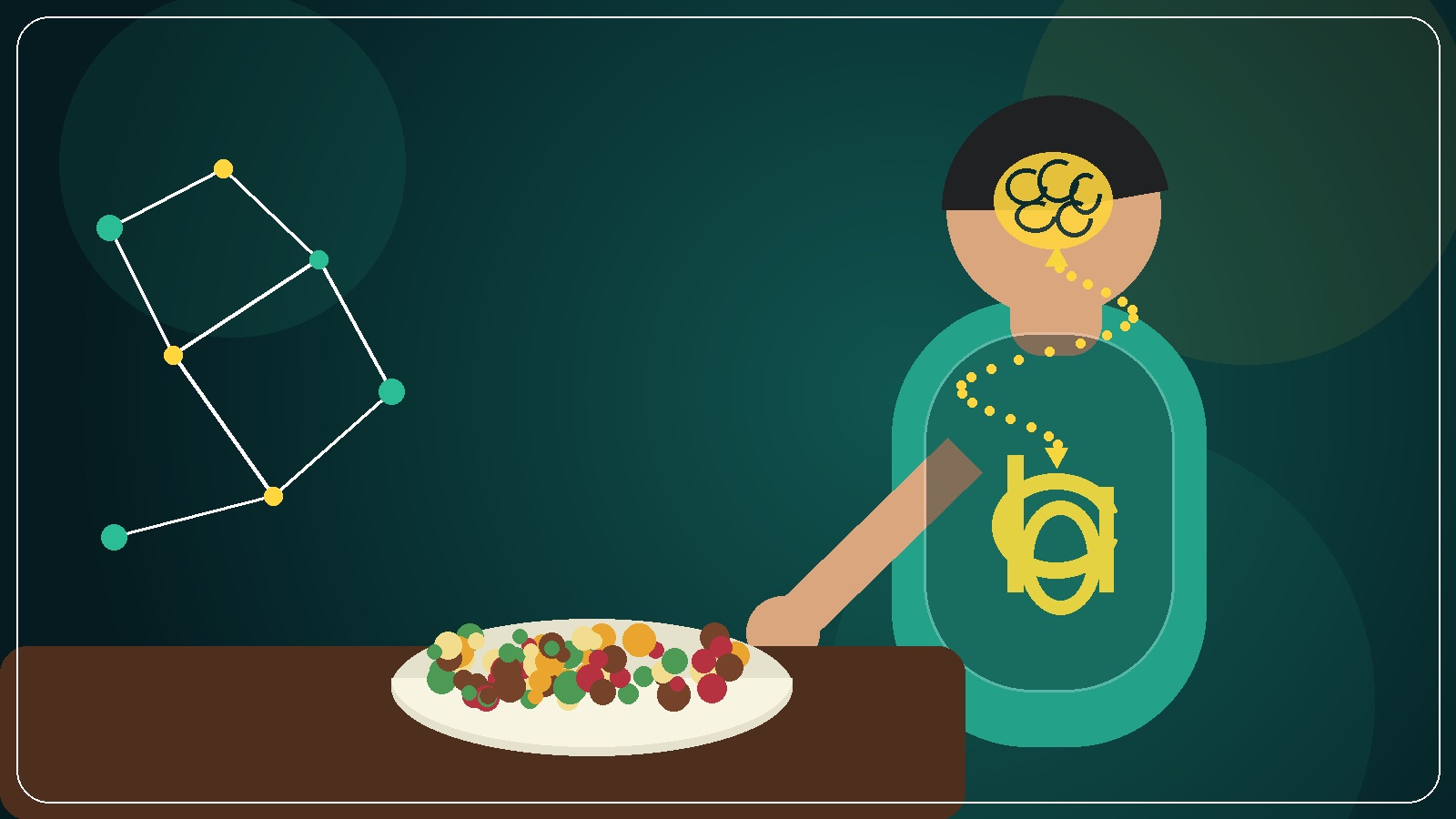
Your stomach tightens before a stressful meeting. You lose your appetite when you are worried. A digestive flare-up leaves you tired and irritable.
Those experiences are real, and they hint at the constant communication between the digestive system and the brain. Scientists often call this the gut–brain axis, or more fully, the brain–gut–microbiome system.
The science is interesting. The marketing around it is often several steps ahead of the evidence.
Your gut does not work like a second brain that independently controls your emotions. Nor can one food, probiotic or microbiome test tell you why you feel low. What researchers have found is a two-way network involving nerves, hormones, immune signals, digestion, behaviour and the microorganisms that live in the gut.[1][7]
Here are five things that network can, and cannot, tell us about mood.
Watch the video
1. The gut and brain communicate in both directions
The first point is also the easiest to miss: this is not a one-way message from the gut to the brain.
Signals move in both directions. The digestive system can send information towards the brain through nerves, hormones, immune activity and substances produced during digestion. The brain can also change gut movement, secretion, sensitivity and the conditions in which gut microbes live.[7]
That helps explain familiar physical responses to stress. Some people feel nauseous, need the toilet more often or lose their appetite. Others develop constipation or notice existing digestive symptoms becoming harder to manage.
These reactions do not prove that stress is the sole cause of a digestive problem. They show that mental and digestive health can affect each other.
The same caution applies in the other direction. Studies have found differences in the gut microbiomes of people with and without certain mental-health conditions. An association does not tell us which came first. Diet, sleep, medication, physical activity, illness, alcohol use, stress and the condition itself can all affect the microbiome.
What the evidence supports: the gut and brain are connected through a two-way communication system.
What it does not prove: that an “unhealthy gut” is the cause of someone’s depression or anxiety.
2. Nerves are one route, not a mood-control switch
The digestive tract has its own extensive network of nerve cells, known as the enteric nervous system. It helps control movement, secretion and other digestive functions.
The vagus nerve is another part of the picture. It carries information between organs and the brain, and researchers are studying how it participates in gut–brain communication.[7]
This has inspired a flood of claims about “vagus nerve hacks”. The problem is that identifying a biological route does not automatically produce a reliable treatment.
Laboratory and animal studies can help researchers understand possible mechanisms. Human mood, however, is affected by relationships, living conditions, physical health, sleep, medication, trauma, hormones and many other factors. A pathway observed in a laboratory does not show that a breathing exercise, supplement or device will treat a mood disorder through that pathway.
Researchers also do not yet know whether many neuroactive substances produced in the gut reach the human brain at levels high enough to alter its circuits in a meaningful way.[7]
What the evidence supports: nerves help carry information between the gut and brain.
What it does not prove: that stimulating one nerve will fix low mood or anxiety.
3. Stress, immune signals and hormones are part of the system
Gut–brain communication involves more than bacteria and nerves. Hormonal and immune pathways are involved too.[7]
Stress activates hormonal and nervous-system responses that can affect appetite, gut movement and digestive sensitivity. The gut also has a close relationship with the immune system because it must absorb nutrients while maintaining a barrier against potentially harmful organisms and substances.
Gut microbes help process parts of food that the body cannot fully digest on its own. Some of the resulting compounds, including short-chain fatty acids, can interact with gut cells and immune pathways. Researchers are studying whether these signals influence brain function and mood.
This is where simple explanations become risky. It is tempting to say that “bad bacteria cause inflammation, which causes depression.” Human biology is not that tidy. Depression is not one disease with one cause, and a blood or stool marker cannot reduce its complexity to a single pathway.
The safer conclusion is that the immune, hormonal, nervous and digestive systems interact. Research into these links may eventually lead to better targeted care, but it does not justify diagnosing a mood disorder from gut symptoms.
What the evidence supports: stress responses, immune activity and gut function can influence one another.
What it does not prove: that a single inflammatory or microbial change explains a person’s mood.
4. A varied diet supports gut health, but food is not a mood cure
Diet changes what reaches the large intestine and therefore what gut microbes have available to use.
Australia’s Healthdirect advises a healthy balanced diet that includes a range of prebiotic foods to support the gut microbiome.[1] Its mental-health nutrition guidance recommends a pattern built around fruit, vegetables, grains and protein, while acknowledging that the reasons diet may affect mental health are not fully understood.[2]
Fibre matters here. It is found in foods such as:
- beans, lentils and chickpeas;
- vegetables and fruit;
- oats and other whole grains;
- nuts and seeds; and
- potatoes with their skins.
NHS guidance recommends getting fibre from varied sources and says UK adults should aim for 30 grams a day as part of a healthy balanced diet.[3] That figure is UK guidance, not a personalised prescription.
If your usual diet is low in fibre, increase it gradually and drink enough fluid. A rapid change can bring bloating or discomfort. People with irritable bowel syndrome, inflammatory bowel disease, coeliac disease or another diagnosed gastrointestinal condition may need tailored advice from a doctor or dietitian.
Food also affects health through routes that have little or nothing to do with the microbiome. A balanced eating pattern provides nutrients, supports stable energy intake and may make regular meals easier. We should not credit every possible benefit to gut bacteria.
Most importantly, eating more fibre is not a treatment for clinical depression or anxiety. Food can support general health, but it should not replace psychological therapy, medication or professional support when these are needed.
What the evidence supports: a varied, fibre-containing diet supports digestive and general health.
What it does not prove: that prebiotic foods treat a mental-health condition.
5. Probiotic mood claims remain uncertain
Probiotics are live microorganisms intended to provide a health benefit. Different products contain different organisms, strains and amounts. Their effects cannot be assumed to be interchangeable.[4]
Researchers have tested probiotics, prebiotics and combinations known as synbiotics for depression and anxiety. Some results are encouraging, but the overall picture is mixed.
A 2025 systematic review looked at 23 publications involving 1,280 people with clinically diagnosed depression or anxiety. Its pooled analysis favoured probiotics for depressive and anxiety symptoms, but the studies were generally small and varied substantially in their participants, products, duration and methods. The review also found publication-bias concerns, while evidence for prebiotics was limited.[5]
A separate 2024 meta-analysis included 12 randomised trials and 707 participants. Some depression scores improved with probiotics, while other commonly used rating scales did not show a statistically significant difference. The authors called for cautious interpretation.[6]
This does not mean probiotics never help. It means “probiotics improve mood” is too broad a claim. A result from one specific strain, dose and study population cannot be transferred to every yoghurt, capsule or fermented drink.
Safety deserves attention too. NCCIH notes that probiotic safety data are limited for some groups and that the risk of harmful effects may be higher in people who are seriously ill or have weakened immune systems.[4]
If you are considering a supplement because of ongoing digestive symptoms or a diagnosed health condition, discuss it with a qualified clinician or dietitian. Do not stop medication or therapy in favour of a probiotic.
What the evidence supports: certain probiotic products may have modest effects in some groups, and researchers are continuing to study them.
What it does not prove: that any probiotic can prevent or treat low mood, anxiety or depression.
Three practical steps without the hype
Build variety into ordinary meals
Aim for a range of fibre-containing foods you tolerate rather than searching for one “superfood”. Variety can be as simple as adding beans to a soup, choosing oats at breakfast, using wholegrain bread or including an extra vegetable with dinner.[1][2][3]
Look after the whole system
Regular meals, sleep, physical activity, social contact and stress management all matter to wellbeing. Some of these habits may also affect digestion and the microbiome, but you do not need a microbiome explanation to benefit from them.
Get help when symptoms persist
Speak with a health professional if digestive symptoms are persistent, severe, worsening or associated with bleeding, unexplained weight loss or other concerning changes. Persistent low mood, anxiety or loss of interest also deserves proper assessment.
If you are in immediate danger or thinking about harming yourself, contact emergency services or a crisis service where you live now.
Frequently asked questions
Can gut health affect mood?
The gut and brain communicate through a two-way network involving nerves, hormones, immune pathways and digestion. This means gut and mental health can influence each other, but it does not show that gut health alone determines mood.[1][7]
Does the gut make serotonin?
Cells in the gut produce much of the body’s serotonin, where it has important digestive functions. That does not mean gut serotonin simply travels into the brain and controls happiness. The pathways are more complicated, and many questions remain under study.[7]
Can probiotics treat depression or anxiety?
Some trials report improvements in symptom scores, while others do not. Results vary by product, study population and measurement method. Probiotics are not a replacement for established mental-health care.[4][5][6]
Which foods support the gut microbiome?
A varied diet containing vegetables, fruit, pulses, whole grains, nuts and seeds provides different types of fibre. Individual tolerance matters, especially for people with a diagnosed digestive condition.[1][2][3]
Should I buy a microbiome test?
Commercial stool tests can describe some microorganisms found in a sample, but the field does not yet have a single definition of the “ideal” microbiome or a reliable way to turn most consumer results into personalised mood treatment.
The balanced view
The gut–brain connection is real. It is also complex, bidirectional and still being worked out.
A varied diet and sensible lifestyle habits support general and digestive health. That is useful advice without claiming that food or supplements can cure a mood disorder. Probiotic research is worth following, but no capsule can stand in for appropriate mental-health care.
General information only. This article is not a substitute for medical, nutritional or mental-health advice.
Sources
[1] https://www.healthdirect.gov.au/the-microbiome [2] https://www.healthdirect.gov.au/food-drink-and-mental-health [3] https://www.nhs.uk/live-well/eat-well/digestive-health/how-to-get-more-fibre-into-your-diet [4] https://www.nccih.nih.gov/health/probiotics-usefulness-and-safety [5] https://pubmed.ncbi.nlm.nih.gov/39731509 [6] https://pubmed.ncbi.nlm.nih.gov/39245752 [7] https://pmc.ncbi.nlm.nih.gov/articles/PMC11126987
